
























How to Ground Yourself in 5 Minutes: A Gentle Routine
A calm, step by step routine you can do almost anywhere, whether your mind is racing or your body just feels switched on. It takes five minutes and needs nothing but you.
If you are searching for how to ground yourself, chances are your mind is racing, or your body feels switched on and you would like it to settle. We have both been there, in supermarket aisles, at work desks and in the car before school pickup. This is the five minute routine we come back to again and again.
What grounding is, in plain words
Grounding is a way of bringing your attention back to the present moment, to what is around you and what your body can feel right now. When our thoughts are running ahead to everything that might go wrong, grounding gives them somewhere steady to land.
It is not a cure, and it will not make a hard day disappear. Many people find it helps the intensity come down a notch, which is often enough to take the next small step.
How to ground yourself: a five minute routine
Find a place to sit or lean where you feel supported. Put your feet flat on the floor if you can. You do not need to close your eyes. If it helps, set a quiet timer for five minutes so you are not watching the clock.
Minute one: arrive
Press your feet into the floor and notice the weight of your body in the chair. Let your shoulders drop a little. Say to yourself, quietly, 'I am here, and I am safe enough right now.' If that sentence does not feel true, try just 'I am here' and leave it at that.
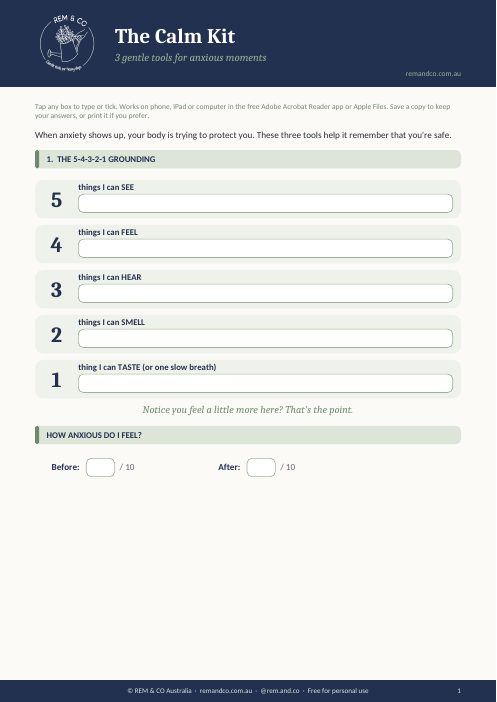
Minutes two and three: the 5-4-3-2-1 senses
Slowly name, in your head or out loud:
- 5 things you can see. Look for small details, like the grain in a table or a line of light under a door.
- 4 things you can feel. Your socks, the fabric of your top, the cool of a cup, the chair holding you up.
- 3 things you can hear. Near sounds and far sounds, including your own breathing.
- 2 things you can smell. If nothing is obvious, think of two smells you love.
- 1 thing you can taste. A sip of water or the lingering taste of tea will do.
Go slowly. There is no right answer and no score. If your mind wanders off, gently bring it back to the next sense.
Minute four: slow your breathing
Breathe in through your nose for a count of four, then out through your mouth for a count of six. The longer exhale is the part many people find most settling. Do this about five times. If counting feels like too much, imagine you are slowly fogging up a window as you breathe out.
If breathing exercises make you feel more uncomfortable, that is okay. Skip this step and stay with your senses instead. Grounding should never feel like a test.
Minute five: a quick body check
Travel your attention from your forehead down to your toes. Is your jaw tight? Are your hands clenched? Do not try to fix anything, just notice and, where you can, soften. Unclench your teeth. Open your hands. Let your tongue rest.
Finish by asking yourself one question: what is one small, kind thing I could do next? Maybe it is a glass of water, a short walk, or simply going back to your task a little more slowly.
When and where to use it
The best time to practise is when you are already fairly calm, because the steps become familiar and are easier to reach for when things get loud. Many people try it:
- Before a meeting or appointment that makes them nervous
- In the car or on the train, once parked or as a passenger
- In a bathroom cubicle when they need a private minute
- At bedtime when thoughts start spinning
- After a hard conversation, to let their body catch up
You can do a shorter version anywhere. The 5-4-3-2-1 on its own, quietly, with your eyes open, takes about two minutes and no one will know you are doing it.
Little things that can help
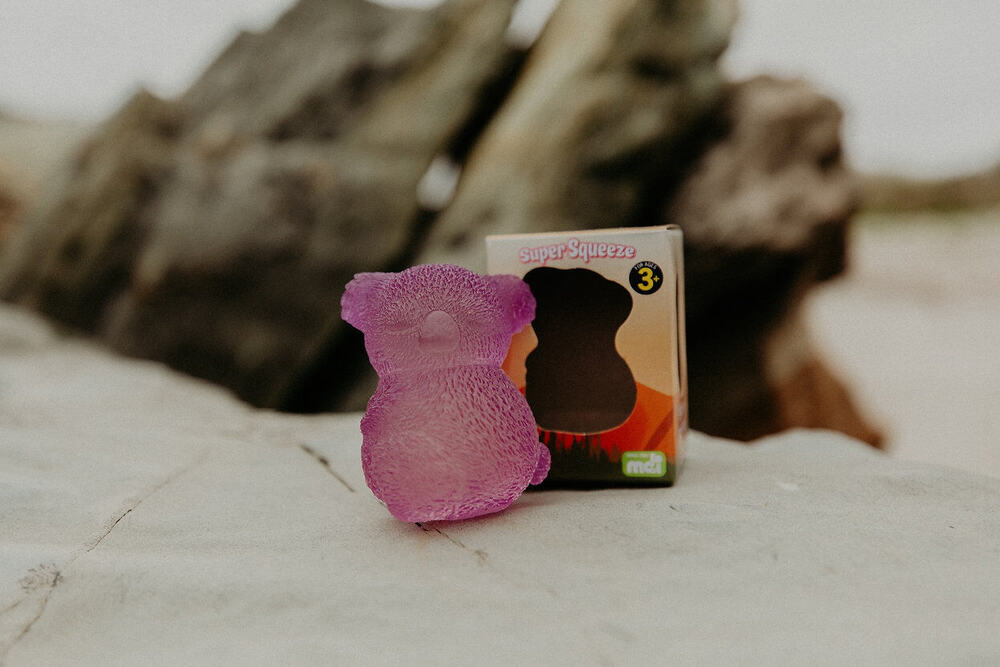
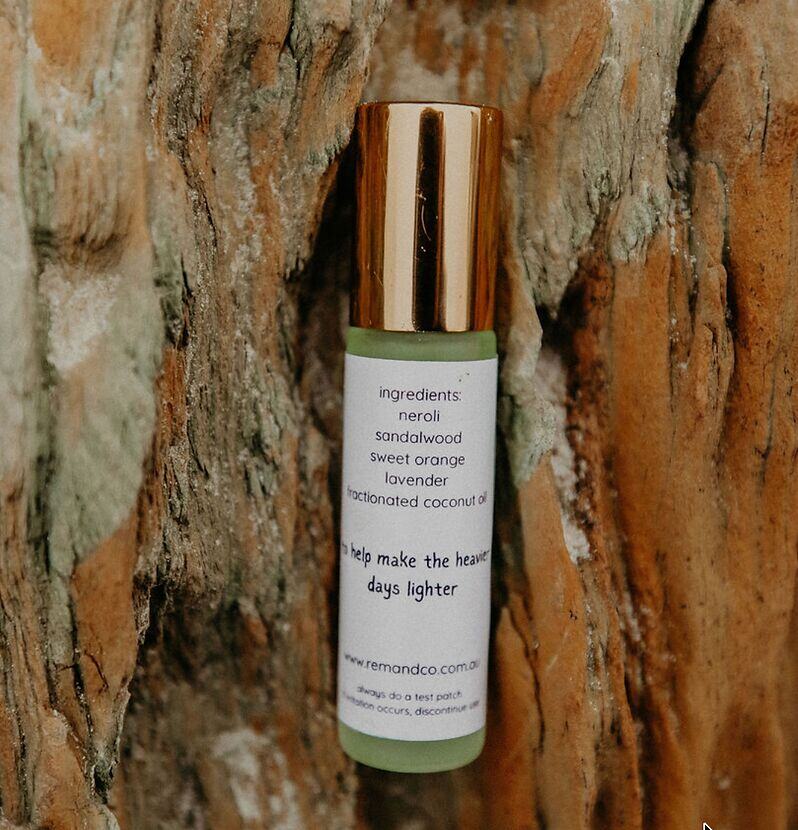
Many people like to hold or use something while they ground. A small essential oil roller on the wrists, if the scent is one you enjoy, can become a cue that says it is time to slow down. Patch test first, and skip it if a scent bothers you. A piece of thinking putty gives your hands something to do while your mind settles. We choose both for our shop because they are simple, portable and kind to carry, and they live in our own bags too.
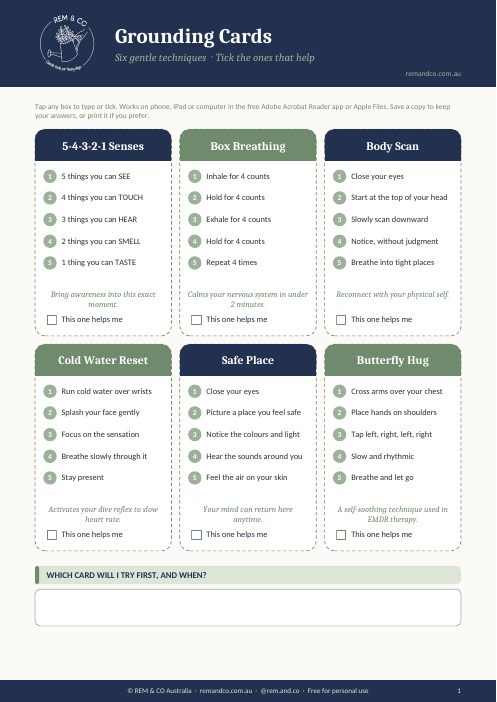
We have also put these steps onto our free Grounding Cards, so you can keep them in a pocket or stick them on the fridge. And our free Calm Kit printable helps you work out which go to tools suit you best. You will find both in our free printables.
A kind note: grounding is a skill, and skills take practice. It might feel clumsy the first few times. If anxiety is getting in the way of your daily life, speaking with your GP or a mental health professional is a good next step. There is no need to wait until it feels bad enough.
Five minutes is a small thing, and small things add up. Be gentle with yourself. Ren and Em
Written by Ren and Em.