




























What to Say to a Therapist in Your First Session
Walking into a first therapy session can feel like walking in blind. Here are some gentle ideas for how to begin, what to write down beforehand, and why you do not need it all figured out.
If you are wondering what to say to a therapist in your first session, please know that the nerves are very common. Sitting across from someone you have never met and talking about the inside of your head is a big ask. We both remember the knot in the stomach before a first appointment, and we would love to make it a little less daunting.
You do not have to have it all figured out
A lot of people worry they will not know where to start, or that they will say it wrong. Therapists meet people at the very beginning all the time. They expect hesitation, long pauses and sentences that start with 'I am not sure why I am here'.
Your job in the first session is not to give a perfect summary of your life. It is simply to turn up and be as open as you feel able to be. The rest is something the two of you work out together over time.
What to say to a therapist: ways to start
If your mind goes blank, borrow one of these opening sentences:
- I am nervous, and I am not sure where to start.
- I have been feeling really overwhelmed lately, and I would like some help working out why.
- I have never done this before, so I might need you to guide me.
- The thing that finally made me book was...
- I am worried about how much of this I can say out loud.
- I would like to feel less anxious when...
Saying out loud that you are nervous often softens the whole room. Therapists are usually glad to hear it, because it tells them where you are right now.
What to jot down beforehand
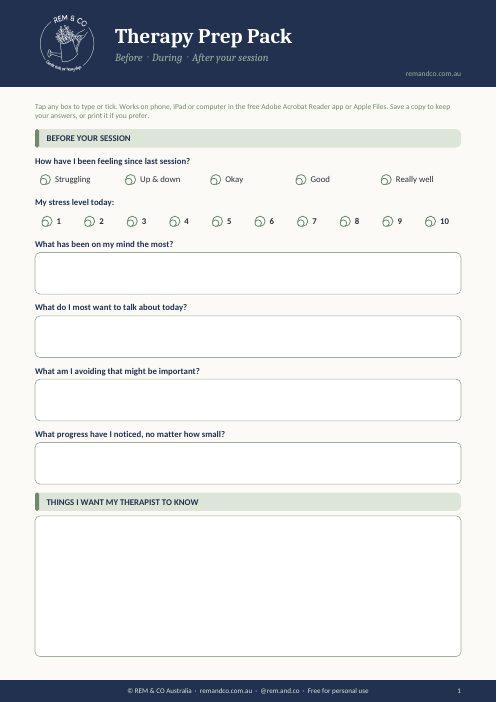
Nerves can wipe your memory, so a few notes on your phone or a scrap of paper are a kindness to your future self. You might write down:
- What has been hardest lately, in a few words or dot points
- When it started, if you know, or that you do not know
- What a hard day looks like, including body feelings like a tight chest, trouble sleeping or a racing mind
- What you have already tried, and whether it helped at all
- Anything you would like them to know about your work, your family or your past
- What you hope might be different one day
- Questions for them, like how they work, how often you would meet, and what happens if you cannot think of anything to say
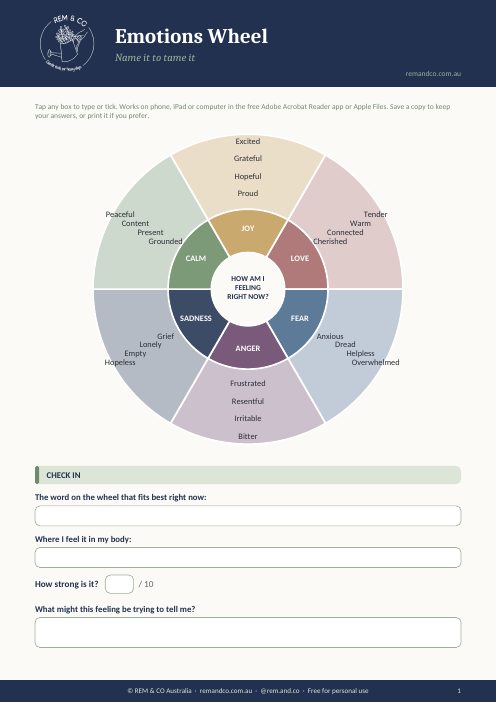
Our free Therapy Prep tool walks you through this step by step, so you are not facing a blank page. If you find it hard to name what you are feeling, the free Emotions Wheel can help. Pick the closest word and say, 'I think it is somewhere around here.' That is plenty to start a conversation.
It is okay to go slowly
You do not have to share the hardest thing in the first session. You can say, 'I am not ready to talk about that yet,' and a good therapist will respect it. You are allowed to ask questions, take pauses, bring your notes and read straight from them.
You are also allowed to decide it is not the right fit and look for someone else. A good match matters, and it can take more than one try. That does not mean you did anything wrong.
Small things for the day
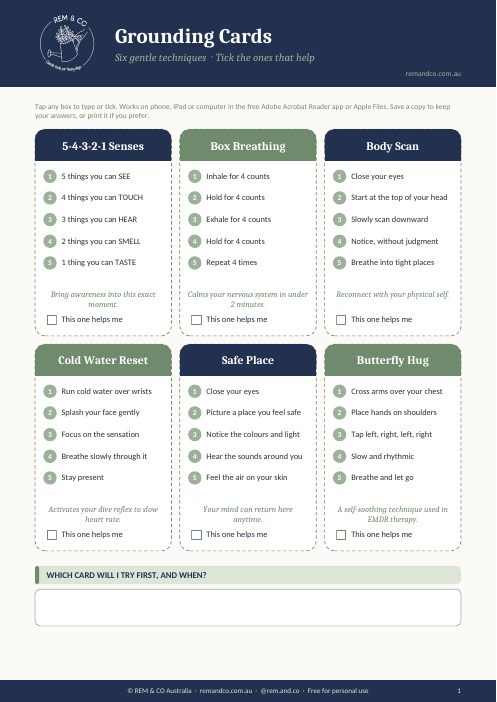
Arrive a little early if you can, so you are not rushing. Take a few slow breaths in the car or the waiting room, with a longer breath out than in. Wear something comfortable. Bring water.
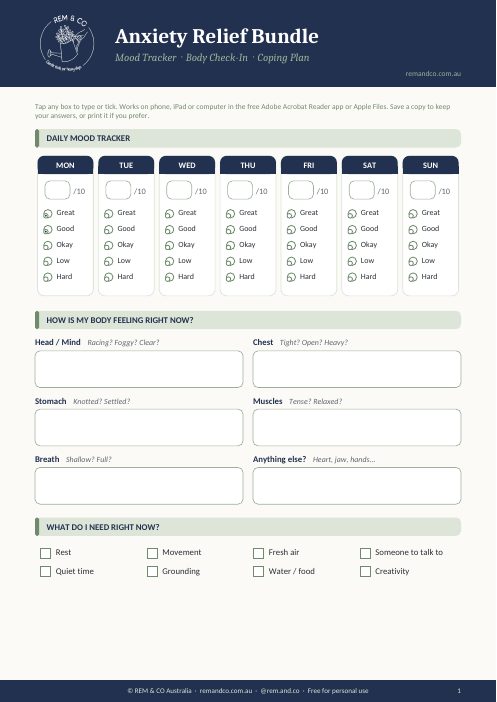
Some people like a small roller on their wrists or a fidget in a pocket for the waiting room. If you enjoy writing things out, our fillable PDF guides give you gentle prompts you can complete at your own pace and bring along. They are not a replacement for therapy, just a friendly place to start collecting your thoughts.
After the session
It is common to feel tired, emotional or oddly flat afterwards. Plan something soft for the rest of the day if you can: a walk, a warm drink, a quiet evening. Jot down anything you want to remember or bring up next time.
We are not health professionals, just two women who have sat in a few waiting rooms with a racing heart. If you are not sure whether to book at all, your GP is a good place to start, and they can talk through your options with you. Reaching out is a brave thing to do, and you deserve support.
Written by Ren and Em.